Wondering how to make your Thousand Oaks townhome stand out when buyers have plenty of attached-home options to compare? In a market where condition, layout, parking, outdoor space, and HOA details can shape value as much as square footage, smart preparation matters. If you want to attract serious buyers, support a strong price, and reduce surprises during escrow, a focused plan can make a real difference. Let’s dive in.
Why preparation matters in Thousand Oaks
Thousand Oaks remains an active market, but it is also a price-sensitive one. Recent market data shows median days on market around 36 with homes selling near asking on average, while other data points to a median 15 days to pending for the broader local market. The message for sellers is clear: buyers are active, but they are paying close attention to value.
That is especially true for townhomes and condos. Current listings in Thousand Oaks show a wide price range, from the mid-$300,000s for some condos to the upper $700,000s and beyond for many attached homes. This means your townhome is not competing against a single average. It is competing against other homes with different floor plans, upgrades, outdoor areas, parking setups, and HOA profiles.
Focus on how the home lives
Townhome buyers often look for a home that feels efficient, easy to maintain, and comfortable day to day. Research shows many buyers want smaller homes with open kitchen-to-dining and kitchen-to-family-room layouts. In practical terms, that means your townhome should feel open, clear, and functional from the moment a buyer walks in.
In Thousand Oaks, lifestyle also plays a big role in what buyers notice. The city’s extensive open space and trail system, along with ongoing downtown development, reinforce how important convenience and daily livability are. Buyers are often weighing not just the unit itself, but how easily the home supports work, errands, recreation, and commuting.
Make each room feel purposeful
One of the fastest ways to improve your townhome’s presentation is to define every space clearly. If you have a loft, niche, den, or landing area, give it a simple, obvious purpose such as a home office, reading corner, or guest setup. Buyers respond better when they can quickly understand how a space works.
Avoid letting any room become a catch-all for storage, pet items, or overflow furniture. In an attached home, undefined spaces can make the overall layout feel smaller and less useful. A clear room function helps buyers imagine an organized daily routine.
Use furniture that fits the scale
Oversized furniture can make a townhome feel cramped. Furniture that is too small can create the opposite problem and make rooms feel unfinished or awkward. The goal is balance: enough furniture to show livability, but not so much that it blocks sight lines or walking paths.
Pay special attention to the living room, primary bedroom, and kitchen. Staging research consistently points to these spaces as especially important to buyers. If your budget is limited, start there first.
Start with the highest-impact prep work
You do not usually need a full remodel to make a Thousand Oaks townhome more competitive. Research on staging and seller preparation shows that decluttering, deep cleaning, and improving curb appeal are among the most common and effective recommendations. These steps help your home feel move-in ready, which is often exactly what attached-home buyers want.
Staging can also support both value and speed. According to recent research, many agents reported faster sales after staging, and some also saw increases in offered value. While results vary by property, the broader takeaway is that presentation matters.
Your essential pre-list checklist
- Remove excess furniture to open up walkways
- Clear kitchen and bathroom counters
- Edit shelves, closets, cabinets, and pantry space
- Deep clean floors, baseboards, windows, and grout
- Touch up paint where walls show wear
- Replace burned-out bulbs and improve lighting consistency
- Clean the front entry, patio, balcony, or yard area
- Store personal items so buyers focus on the home, not your belongings
These are not glamorous upgrades, but they often do more for first impressions than expensive projects. Buyers notice cleanliness, brightness, and usable space right away.
Highlight features buyers already value
A strong listing does not just show your home. It helps buyers quickly understand why it fits their needs. For Thousand Oaks townhomes, a few features tend to matter again and again.
Outdoor space matters more than you think
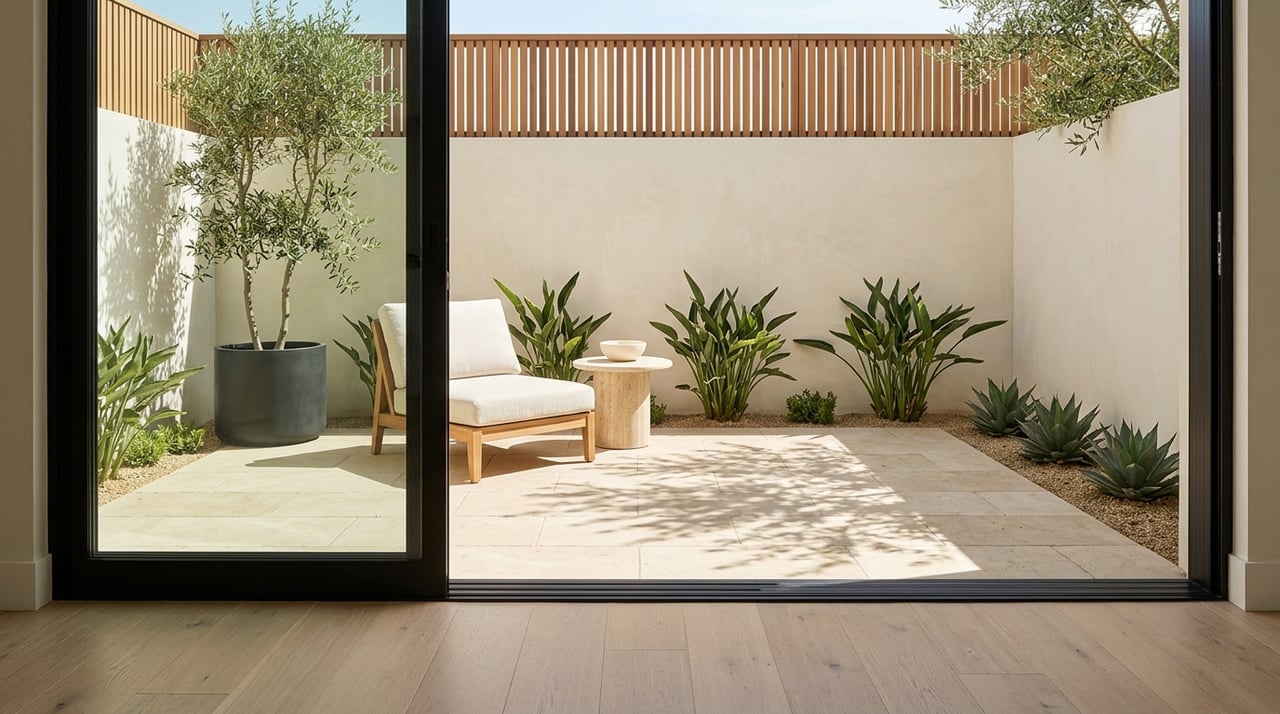
If your townhome has a patio, balcony, courtyard, or small yard, treat it like real living space. Even a compact outdoor area can make the home feel larger and more versatile. A clean floor surface, a simple seating arrangement, and tidy planters can help buyers see value beyond the interior square footage.
This is especially relevant in Thousand Oaks, where access to outdoor recreation is part of the area’s appeal. Your private outdoor area does not need to be elaborate. It just needs to feel intentional and usable.
Parking and storage should be easy to understand
Attached-home buyers often pay close attention to garage space, carports, guest parking, and storage. If your property includes a two-car garage, built-in storage, or an especially functional laundry area, make sure those benefits are easy to see. A cluttered garage or overstuffed laundry nook can hide value that buyers would otherwise appreciate.
If possible, organize utility and storage areas before photos and showings. Clean shelving, labeled bins, and open floor space can help these areas feel practical rather than cramped.
Energy updates should be documented
Energy efficiency is increasingly part of buyer conversations. Buyers often ask about windows, doors, and siding, and they may also respond well to updates that suggest lower maintenance or lower operating costs. If you have made improvements in these areas, gather any warranties, permits, or records before you list.
Documentation matters because buyers and appraisers may not automatically assign value to an upgrade unless it is clearly supported. A simple file of receipts and records can strengthen your value story.
Price from the community, not the headline
One of the biggest mistakes sellers make is relying too heavily on a citywide median price. In Thousand Oaks, attached-home values can vary widely depending on the HOA, exact location within the community, floor plan, condition, and monthly dues. A townhome near the top of one price band may not compare well with another just because they share the same city name.
The better approach is to start with recent sold properties from your HOA or a very similar nearby community. That gives you a more realistic picture of how buyers are reacting to homes with similar dues, amenities, parking, and maintenance responsibilities. It also helps protect you from overpricing based on broad market headlines.
Why disciplined pricing helps your prep pay off
Preparation and pricing work together. Even a beautifully prepared townhome can lose momentum if the list price does not line up with the market. In a market where homes often sell close to asking, buyers still expect the asking price to make sense.
A well-prepared townhome priced from relevant comps gives buyers fewer reasons to hesitate. It also creates a more defensible position when questions come up about condition, HOA dues, or community differences.
Gather HOA documents early
For a California townhome sale, HOA coordination is not a side task. It is a central part of the transaction. Under California Civil Code sections 4525 and 4530, sellers must provide governing documents and other required materials, and the association must provide requested documents within 10 days of a written request.
Other required disclosures under California law include annual budget and reserve information, insurance summaries, loans, and for condominium projects, FHA and VA approval status. Buyers use these documents to understand dues, reserve strength, insurance, and the potential for future assessments. If you wait too long to collect them, you can slow down your sale just when buyer interest is strongest.
HOA items to request before listing
- Governing documents
- Rules and regulations
- Current budget information
- Reserve disclosures
- Insurance summary
- Any separately stated document fees
- Information on loans or assessments
- FHA and VA approval status, if applicable to the project
Having these materials ready early helps buyers review the community with confidence. It also reduces the chance of last-minute delays in escrow.
Do not overlook required disclosures
Disclosures are another area where early preparation can save time and stress. California law requires important property and hazard disclosures, and attached homes can involve added considerations. If your community includes balconies, decks, or other exterior elevated elements, state law requires regular inspection, with the first required inspection completed by January 1, 2025.
Hazard disclosures may also cover wildfire zones, earthquake fault zones, seismic hazard zones, flood areas, and wildland fire areas. Thousand Oaks also directs residents to wildfire preparedness resources through its emergency information. If your townhome was built before 1978, federal lead disclosure rules also apply.
The key is not to treat disclosures as paperwork to handle later. They are part of how buyers evaluate risk, condition, and readiness from the start.
Use marketing that matches the home
Because townhomes often have compact footprints, presentation in photos and video can have an outsized impact. Research shows buyers’ agents place high importance on photography, video, and virtual tours. That matters even more when your goal is to show flow, function, and natural light clearly.
Good marketing should help a buyer understand the floor plan, room purpose, and indoor-outdoor connection before they ever visit in person. For a home that has been decluttered and staged properly, strong visual marketing can help every improvement work harder.
Robin Plain’s approach combines modern listing exposure with personal guidance, which is especially helpful when your sale involves HOA coordination, pricing decisions, or a more sensitive situation such as a trust, probate, or relocation sale. With more than 30 years of Ventura County experience, she brings the kind of steady local perspective that helps sellers prepare with purpose rather than guesswork.
If you are getting ready to sell, the goal is not just to make your townhome look nicer. It is to present it in a way that feels spacious, functional, and well managed, while backing that up with the right pricing and documentation. For tailored guidance on preparing and positioning your Thousand Oaks property, call or email Robin Plain for a personalized Ventura County market consultation.
FAQs
What should I fix before listing a Thousand Oaks townhome?
- Start with decluttering, deep cleaning, lighting, touch-up paint, and cleaning or staging any patio, balcony, or entry space. These steps usually have more impact than major remodeling.
How should I price a Thousand Oaks townhome for sale?
- Base pricing on recent sold homes in the same HOA or a very similar community, not just citywide averages. Attached-home values can vary a lot by condition, layout, dues, parking, and amenities.
What HOA documents are needed for a California townhome sale?
- Sellers generally need to provide governing documents and other required HOA materials, including budget and reserve information, insurance summaries, and certain fee disclosures, as required under California law.
Do outdoor spaces help a Thousand Oaks townhome stand out?
- Yes. A patio, balcony, or small yard can make the home feel larger and more useful when it is clean, well lit, and staged as an extension of the interior living space.
Do energy-efficient upgrades help sell a Thousand Oaks townhome?
- They can help support buyer interest, especially when you provide documentation such as permits, warranties, and records for updates like windows or doors.
Are disclosures important when selling a Thousand Oaks attached home?
- Yes. California sellers need to address required property and hazard disclosures, and some communities also have inspection requirements for exterior elevated elements such as balconies and decks.